Friday, March 15, 2013

Some pics from Bangalore ...

Hope all of you are doing good and in the process of packing up if you are going to be R2I during this year (and if that is tied to the school timings)...

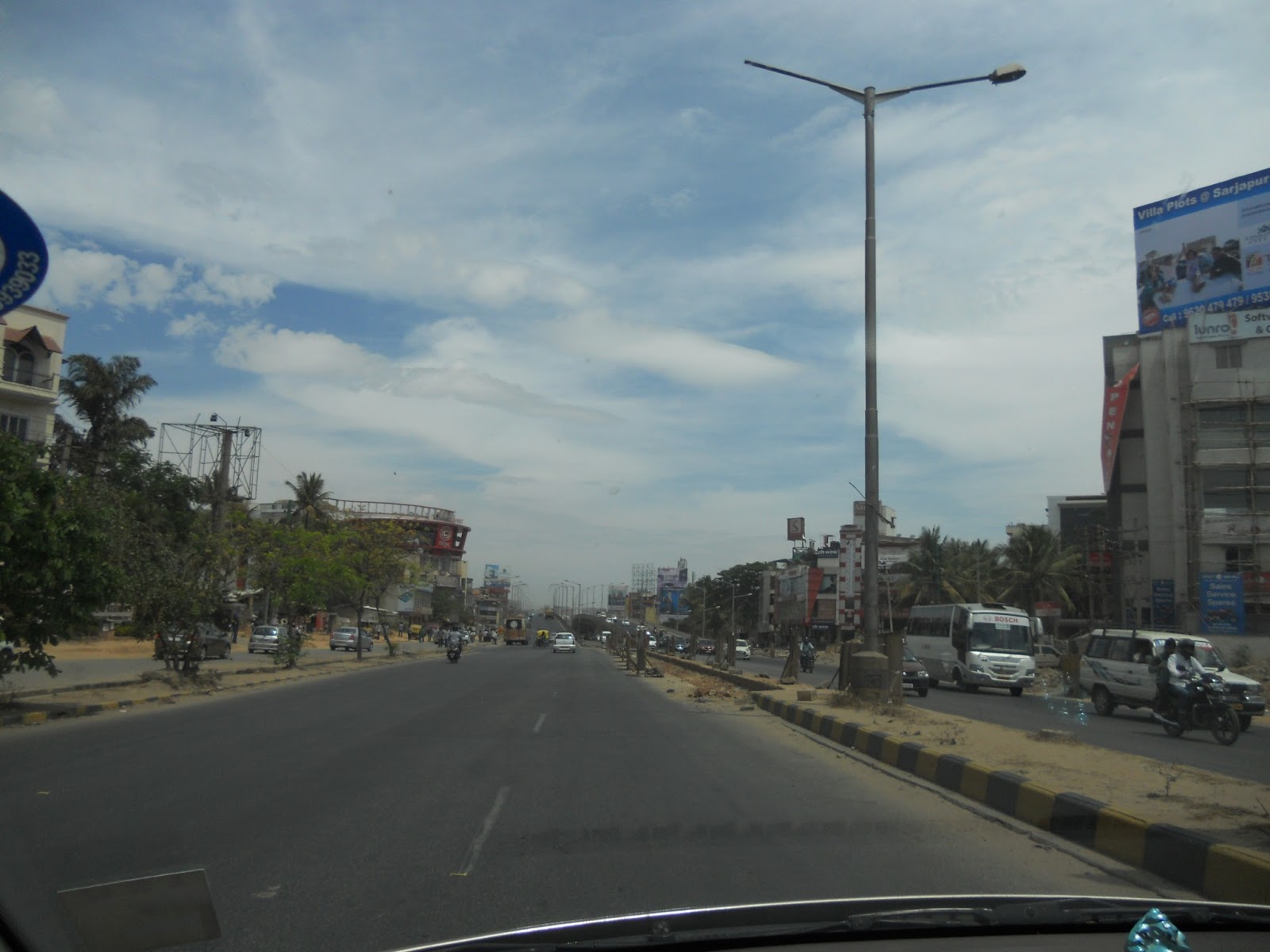
One thing I was looking for was good, latest pics from Bangalore, specifically in & around tech sectors. Thought of sharing some which are the latest to give you an idea how things look here. These are from in & around Outer Ring Road. This is a major artery now, connecting all the way from Banashankari to Hebbal. Also, connects with the other ring road at Banashankari, going all the way to Mysore Road, Vijayananagar and back to Hebbal. Most of the tech companies are located in the Sarjapur Road-Marathhalli belt, K.R. Puram and Hebbal (Manyata IT Park).

If I get some good reader feedback, will share some more videos and pics from other areas as well.
ORR - near HSR Layout

ORR - near Silk Board


ORR - near Banashankari, with Metro track overhead

ORR - near Bellandur, Bangalore Central Mall

ORR - near Mahadevapura

ORR - another Metro track

ORR - Marathhalli

ORR - towards Marathhalli

Hebbal - Manyata IT Park

Inside Manyata IT Park


Thursday, January 24, 2013

Investing in Bangalore real estate - pessimistic view ...

I covered the optimistic view in the last post - had to give good news before giving the bad news! Now it is time for the pessimistic view.
Why both optimistic and pessimistic views?  That is the nature of the beast! The old saying of 'risk versus reward' can't go wrong and this is definitely a 'time will tell' type of story.

As a R2I hopeful, you might be quite familiar with what happened in the Western world in the real estate scenario in the last few years - lets revisit that a bit. There was so much hype that even office cleaners bought homes(not a made up one, this is a real story and I have seen this) - since homes can be bought literally for 'free' - loans were available with no down payment and pretty much 0% interest. No background checks were done for income or eligibility. Needless to say, all of got foreclosed when their 'free' term ended and they couldn't afford to even do the interest payments. Now, that was greed working its way and taught some tough lessons that 'nothing is free'.

So, what is the take away for Bangalore real estate from this story? There are few for sure and this is where the pessimistic view comes into picture. Let me list few downside points and leave you to think about those...
  • There is a huge demand for apartments in Bangalore and there is no statistics to show how much of these are investment properties versus how many of these are bought for occupation. There is a good demand for rental housing as of now and is expected to stay but at the current rate of new building, there could be an oversupply when constructions are completed - needless to say there are so many new mega size projects which are in-progress as of now.
  • Adding to this factor is that - there is very minimal control on how much can be built. Many of the apartment complexes are very large and can house anywhere from 300 to 1000 families. BBMP, one of the worst run entity is not worried about any of the factors like road infrastructure, water - anything is possible by 'you know what' and 'you know who' factors. It is the golden time for real estate in Bangalore and so many things can be developed in-terms of infrastructure with the taxes that are pouring in but unfortunately the funds are pouring in to leaking pots! That can spell doom to the real estate future of Bangalore.
  • Infrastructure: As I said above, the density of occupation is not measured against available infrastructure and building happens without any regard to such factors. You would be surprised to see  that for a apartment of the size of 300-500 families, there would be 5-6 visitor parking slots! That is the kind of planning and approvals that go along with these buildings. The approach roads are so small  hardly one car can pass thru' but that is not a factor when building permissions are given.
  • Water availability: You might already be aware of the 'Kaveri' war! Unfortunately, there isn't sufficient natural water supply closer to Bangalore. With the indescriminate digging of borewells, there is more water extraction than preservation. Rain water harvesting is a must for new development but nobody checks whether they are really maintained after homes are built. As one saying goes 'water scarcity has made cities to vanish'. Water scarcity can impact Bangalore real estate scene in a major way. Unfortunately, our politicians are busy holding on to their seats and filling up their pockets than any of these real issues.
  • Tech industry dependence: Unlike other cities, the apartments and high end real estate is driven only by tech sector in Bangalore. We do see other industries like pharma etc coming in but at much slower rate. If the cost keeps going up and it is not economical anymore for multi nationals to come here, that could impact this sector in major way as well.
Anyway, these are my opinions - pls feel free to sound off your thoughts ...


Wednesday, January 9, 2013

Investing in Bangalore real estate - optimistic view ...


As I mentioned in my previous post, let me cover the optimistic view of investing in Bangalore real estate. Unfortunately, like any thing else, risk and rewards go hand-in-hand here as well. If somebody says 'investing in real estate in Bangalore/India is the sure bet to get handsome returns', don't trust that! The old truth of 'risk versus rewards' always wins. However, in the current environment, Bangalore real estate does look in the upward trend and what future holds is a 'time will tell' story...

Many factors contribute to this:
  • Tech sector is definitely driving the housing market. Banks are still generously giving home loans and it is very easy to get funds to invest in an apartment unit. Crossing loan amounts of above 60-70 lakhs becomes a challenge even for the tech folks but even at this level, it is still possible to settle on something.
  • Availability of high-tech workers: It would be hard to find anywhere else in India the amount of tech savvy people like in Bangalore. This naturally attracts more tech companies to have Bangalore as the location, which in-turn drives the real estate market.
  • There is still a good influx of people from all parts of the country to Bangalore(not only in tech sector but other peripheral sectors like hotels, construction etc) and that will keep the demand at higher level. The fact that it is difficult to get a good apartment unit in a decent location shows that there is still demand for apartment units. This is typical in larger communities where there are good facilities like swimming pool, club house, good walking area, gym etc.
  • Bangalore tops in getting access to malls, entertainment, good Indian/international food etc. This does attract lots of folks to stay in Bangalore.
  • Whether is a major factor - it is comfortable throughout the year, which is hard to beat even when compared to any part of US.
  • There is still lots of international investment that is happening into Bangalore - not only in the tech sector but in other sectors like hotels, malls, hospitals etc. As far as new tech companies starting offshore setups, that is a TBD. However, I have seen many, many startups, which are setting up offices in Bangalore, which is a good sign for real estate as well.
I have seen places like Sarjapur, which are really outside of Bangalore and not at a commuting distance for work to high tech areas getting sold out when it comes to Villa/apartment projects. Unfortunately, nobody knows whether these are getting bought for investment and with a view of appreciation or they are folks really who are going to stay here when homes are ready. If you are from California, you might remember the story of city Stockton!

Overall, if you count the factors above, it seems like good times are there to stay for some time. If you buy the right property at the right location, you can still get good returns. However, to note, buying a finished apartment and keeping it for few years with a view to sell down the line won't get you much - they may go up a bit but start loosing value as the apartments start getting older. Will cover such scenarios in my next post ...


Thursday, January 3, 2013

Bangalore real estate - should I invest for R2I ?

Looking at the traffic to the related posts, I can see that there is definitely lots of interest in the topic of real estate in Bangalore. This is very relevant if you are doing R2I to Bangalore as well. Hence, let me try to  add my 2 cents, with R2I as the focus ...

As a possible R2I, you have few choices:
  • Buy an already built apartment
  • Buy an upcoming apartment, which is not yet built.
  • Buy a site and construct.
  • Buy an already built home.
All of these have their own +ve and -ve sides.

Option #1 Buy an already built apartment: This is going to be bit of an expensive proposition. Once completed, price of such apartment goes up - it could be Rs. 3000 or so during initial launch and it could go up to Rs. 4000 or so once completed. However, you are avoiding the risk that builder may run into some legal issue and may not complete or delay. Also, in the already built apartment, many things are already established like swimming pool, STP etc.

Option #2 Buy in an upcoming apartment, which is not yet built: If you have strong R2I feeling or sure about it, this is the best option - if you plan to move to an apartment setting. Prices are lower and you can save anywhere from 10 lakhs to 30 lakhs. There is risk that builder may run into legal issues or may simply delay the handover. Also, if your job location is not fixed, this may become a challenge (whereas in the option #1, you can buy close to your work place). Note that builders take anywhere from 2 to 3 years to complete once they launch. Apartment communities do provide much more social exposure to you and kids but the space you get is much more limited. The problems of noise from neighbors(like in US apartments) is not there since walls are concrete. Also, noise from upper floors are relatively less (you definitely don't hear toilet flush on your head!).

Option #3 Buy a site and construct: This could work very well, given 2 constraints - a)you have some time to come over to India, look for a site, do all of the paper work b)willing to wait for few years before you can occupy. Remember - getting a good site in a good location with clean paper work is NOT easy. Also, getting a house constructed along with your work schedules is no joke. I haven't yet seen a single house owner who said he/she was able to get it done in-time. All of the advice we have gotten so far is to avoid this if you can. However, here you get the option to build your home the way you want. If you construct an independent house outside of a gated community, you need to worry about the security as well.

Option #4 Buy an already built home: This is still an good option. Normally, already built houses don't carry so much value. It is the land price that matters more. However, don't at all be surprised to see a price tag of anywhere from 2 to 5 crores (yes, that is crores for you!!!) in gated communities in high-tech areas like whitefield. You can get older houses within 1.5 crores or so (more like 2500-3000 sq ft area) in decent areas but search is going to be bit longer.

Looking from the investment perspective, I don't see any indication of the prices going down any time soon. Instead all indications are that they are heading upwards. In general, the land gets more appreciation and you can safely sell and invest somewhere else on R2I (say, you need to stay in a different location). So, if you have concrete R2I plans, planning ahead using one of the options could save you some $$$!

I will cover the optimistic and pessimistic parts of buying real estate in Bangalore in my next post ...


Monday, December 31, 2012

Wish all of the readers a very happy and prosperous new year 2013. 

If you have R2I plans for 2013, wish you all the success ...


Sunrise in Kanyakumari


Monday, December 17, 2012

Bangalore is the best city to live in India - really???

For those of who haven't seen this article, this was a result of the recent survey 'Quality of Living Survey - Worldwide Rankings, 2011' done by the global HR (human resources) consultancy major Mercer.

Read the article here:
http://articles.timesofindia.indiatimes.com/2011-11-29/bangalore/30453876_1_global-list-living-survey-cities

I can say only this - there might be some truth to this (when compared to other Indian cities) in-terms of climate, high-tech job opportunities, highly educated, mild tempered people etc but infrastructure-wise, Bangalore would loose all of the points. Roads are getting worse day by day with no fixes in sight, no footpaths, uncontrolled housing development etc. If you take all of those into account, Bangalore wouldn't fare much. Also, the 'quality' part can be really debatable - if you haven't seen cities outside of India, may be you can call this some quality but for most of us who have seen what quality is, this is a far cry!!!

Also, if Bangalore is called the 'best place to live', imagine the plight of other cities :-(


Wednesday, December 12, 2012

R2I in 2013? What you should be doing now?

I covered this topic around the same time last year. What you should be doing now for R2I in 2013 is not going to be much different from what summarized during last year.

If you have not read that post, here it is again:
http://www.blogger.com/blogger.g?blogID=4278261385449268301#editor/target=post;postID=7473379386101222317

If you have school going kids, you should have settled on a school by now. If not, there is still time - make sure you use the holiday time to pick a school, talk to the school admin and settle down.

If your kids are not yet school going, your priority would be to sell/rent your house there and pick a location and start filtering down where you would like to stay in the city of your choice. Commuting is not fun (not just long but not fun either) in most of the cities here. So, make some progress on that front.

Of course, there is no better time to cleanup the items. Now is the best time to start to selling unwanted stuff and accumulating what you are going to need once you R2I - this is the shopping season as well in US and other countries.

If you are still debating, settle the debate. Possibly my post on R2I decision assessment would be of help:
http://r2idiaries.blogspot.in/2011/12/r2i-or-nr2i-not-to-r2i-dilemma-take.html

Good luck with your R2I efforts ...


Tuesday, December 11, 2012

Kids coping with R2I - revisited ...

One of the readers asked about how kids are coping up after R2I here: http://r2idiaries.blogspot.in/2012/06/reflecting-year-of-r2i.html

I have covered this topic here before http://r2idiaries.blogspot.in/2012/01/kids-settling-down-in-india-after-r2i.html

But, let me recapture some of the latest updates on the kids front...

I guess I am the first one to make this up but guess it is worth the say - "You can take the kid out of US but you can't take US out of the kid" :-). Substitute your country of choice in-place of US! Not too surprising indeed since after looking at a much more sophisticated, well-behaved society, it is bit hard to adjust to a environment where things are set back by few years. If you grew up in India, it is hard to see thru' the eyes of the kids who are born outside of India. 

Here was one interesting note from our 6 year old - after coming back from school he said he doesn't like Bangalore. When asked why, he said 'people here drive thru' red light'!!! He was reflecting on the lack of orderliness which we miss as R2I as well but for them it is hard to understand why such things happen here and some sort of negative feeling develops. Unfortunately, you can't do much about it.

But, there are many, many positive things we have seen - my first one is asking about our family connection each time we meet one of our closer family members. 6 year old is 'surprised' to find out that he has '2 grandpas, 2 grandmas, 4 uncles, 3 aunts etc etc. Don't think that kind exposure would have happened being at US and with a month of visit every other year. They are happy to meet and play with their cousins, which happens at least couple of times a year now.

Choice of international school and selection of language definitely made a difference. They are doing very well in school (being in top 3 in the class, getting above 90% score, getting some medals in sports etc).  Older ones will complain a bit about the amount of writing required, which is bit more than what is expected in US. The crowd at school made a big difference since many of them are R2I kids as well. Also, many of the teachers in the school are much more used to dealing with such kids, which makes a difference as well. However, one catch - international schools are definitely on the expensive side. Unless your kid is very flexible and outgoing, plan of starting them at an international school and switching to another regular school in 1 or 2 years doesn't work - kids will have a good friend circle and will resist the move. 

Teaching approach wise, Indian schools are changing as well, even though they are not at par with US schools. There are many hands-on projects, reports to be done with pictures etc. Tests don't require too much of 'mugging' since many questions are objective type. At the end of the day, we haven't seen kids being depressed or in a 'not able to handle' type of situation. The environment is much more competitive since there is lot of parent time that is being put in from all of the parents.

Health is bit of challenge - they do fall sick bit more often. Hope that improves in bit of a time. They do eat much more fruits, drink more juice etc - guess it is the weather that helps. 

Hope I have answered some of the questions you folks have about kids. Pls feel free to drop a comment if you have questions/concerns...


Sunday, November 25, 2012

R2I in 2013? Read this for choosing the schools ...

If you are planning for R2I in 2013, schools in India should be the top priority in your plan already - since the process starts pretty early here. 

Here is one article that might help you greatly for school selection...

http://epaper.timesofindia.com/Default/Scripting/ArchiveView.asp?Daily=TOIBG&AppName=1&login=default&pub=TOI&Skin=TOINEW&Enter=true&BaseHref=TOIBG%2F2012%2F11%2F22&Page=27

Hope this helps...


Thursday, August 30, 2012

The toughy - how much money I need to have before R2I? (as of 2012)


This is a tough question to answer but let me give this a try. The usual response would be - that depends on a person's lifestyle but let me try with the current cost of living in a city like Bangalore.

Main cost (like in Western countries) is the housing. Next comes the transportation, kids education, food etc. Let me break those up further with some specific numbers...

Housing: Assuming a decent locality and closer to IT hubs,
- If you are going to rent, it can vary from 15,000 to 30,000/pm. 
- If you are going to buy a site and construct, estimate would be atleast from 60lakhs to 1 Crore (assuming a 1500 sq ft apartment or 30x40 site)
- If you are going to buy an apartment, estimate would be from 70lakhs to 90 lakhs

Transportation:
Using public transportation like usual buses wouldn't be an option. These days lots of techies use the A/C Volvo buses in Bangalore that BMTC has provided and that works nicely if you are staying closer to the bus connection.
- If you are going to buy a car, it would cost you from 7 lakhs to 12 lakhs.
- If you are going to take an auto, daily cost would be anywhere from Rs 100 to Rs 200

Kids education:
- If the kids have grown up in US, don't consider regular schools at least for first few years. Any good international school costs at least 1 lakh/kid (this is normally including the transportation). It can go up as high as 3 lakhs/year.

Food etc:
- Here it depends on lifestyle, i.e, how many times you eat out, what type of resturant is considered decent etc - note any average buffet in a decent resturant starts around Rs. 200 these days and can go upto Rs. 800! (and I am NOT talking about Leela palace here!). With two kids, your normal grocery bill would be in the range of Rs. 2000 to Rs. 3000/week.

Household expenses:
- This would be for house maid, driver etc. You can budget Rs. 1000-2000(based on the home size) for the maid and Rs. 7000-8000 for the driver, if you keep one. Add an extra Rs. 3000 or so, if you are going to have a cook(part time).

So, all in all, assuming you are renting, your monthly expenditure would be something like this:
Rent: 20,000
Car:   5,000 (petrol only)
Kid(1):   10,000
Kid(2): 10,000
Food etc: 10,000
Household:10,000
Misc:  5,000
---------------------------
Total:    70,000
---------------------------
Head spinning already looking at the numbers? No kidding, that's right, Bangalore is an expensive place to live! Assuming your after-tax take home is @ Rs. 1 lakh, you would have a bit of savings for those yearly travel plans! (I am conservatively assuming 1 lakh but based on your experience and whether single person or two people are working, it could be much higher). However, the numbers here are assuming 2 kids - you can subtract around Rs. 20,000 if you have one kid.

Now, back to the topic of how much R2I savings you need before you head back. As you can see, the earnings you do here can comfortably take care of expenses with some left as savings. So, the funds you need to consider is the amount needed to buy/construct a home once you are back here + the savings you need to keep back there (say, for kids higher education, assuming they will be back for studies or some funds for you re-start if you return back). After returning as R2I, it makese sense to own your home rather than rent or have a home loan. As I said earlier, the own home would need anywhere from 60 lakhs to 1 crore at the minimum. Assuming current rate of Rs. 55 for a Dollar, that would be $150,000. You will need some funds for initial expenditure like buying a car, home appliance etc, which could total upto Rs. 15 lakhs or so. So, add another $25,000 for that. So, your total R2I needs are $175,000.

If you are keeping back another $125,000, that would total up to a savings of $300,000. Of course, you can do R2I with much less, if you are going to take a home loan here (which will reduce your savings here) or don't plan to keep savings back where ever you are. Also, the investments you do in India(like real estate, life insurance etc) can be done based on your earning potential here and normally there isn't a need to account for that.

In summary, you can start R2I with a savings of $300,000 or so. This is just a guidance figure, your mileages may vary significantly :-)


Monday, August 27, 2012

Internet connectivity options


Back after few days of break or has it been more than a month! 

Thanks to all the readers for provided feedback aksed questions or gave comments - very much appreciated. If you have questions/doubts, pls don't hesitate to ask - I have been in the same boat a year ago and have made it so far here :-)


One topic that I had questions/doubts and didn't get clear answer was about Internet connectivity once I reach here and afterwards. For techies like us, Internet is like water, can't live without. Also, gives the option of working from home, which is valuable when whole family is trying to settle down. Have tried couple of options so far and listing down some feedback that could be useful...

Two main options here: DSL based versus Data Cards(also called USB Dongle here).

DSL based: 
Airtel and BSNL are the two main players in Bangalore. Airtel may not be available in all of the areas and apartments unless they are wired but most of the places have BSNL connectivity. Once we were in the apartment, getting AirTel enabled was easy - called them and the service man came in a day or two, gave the DSL modem(I had to buy that from them), configured it (he even offered to configure the wireless router but didn't have a 110V supply for that one yet). Internet was enabled in few minutes.

It is a pain to work with BSNL though like any public sector - and BSNL is known to be one of the 'better working' public company! Haven't seen that 'better' part yet. BSNL has to deal with pretty low skilled labour (like linemen) and that is where the problem lies - most of the tech people are good and can resolve issues, configure your modem etc) but these linemen who has to enable the line to your home or put a new line are pretty 'old' fashioned. Only option is to physically load them to your vehicle and get them to your place. Otherwise, they simply won't show up. And after 2 months of usage, our DSL bill is not yet generated! So far, the connectivity has been ok - not much dropped connections, eventhough the DSL modem(which worked fine with AirTel DSL) sometimes gets hung when used along with the wireless router and VOIP phone. Hasn't been consistent enough to start debugging yet. AirTel was pretty solid when it came to connectivity and consistent speed. BSNL speed is ok as well and I can work pretty smoothly with remote servers.

Data cards: 
Many choices here with varying degree of speed and consistency. Have tried Tata Photon, MTS and AirTel and AirTel has been the best so far. Getting them is not too difficult but once you have some type of address proof. When we relocated last year, got the Tata Photon - government mandates photos and address proof documents and they do a address verification as well. If you have started renting, this is one of the reasons to have a rental agreement - it will come in handy in many places like driving license, electricity, gas connection etc. Some renters may not be too keen in providing this but you MUST and SHOULD get the rental agreement with address mentioned. If you don't have a rental agreement, passport works as well(you might be surprised but even a expired, cancelled passport copy can work as well in some cases!). The first card I got was Tata Photon - speed wasn't that great at all but gave me connectivity at e-mail level.

Since we moved after a year, wanted the data card again when we establish the Internet at new place - this time only BSNL was the option. Tried to get the old Tata Photon activated again. I was asked to visit their retail shop in Koramangala, visited them in the evening and what a horrendous experience it was. They made me wait 2 hours (all the while 5 support people where crowding around a desk and chatting) - just to tell that it will take few days for them to re-activate it. There were lots of people waiting and frustation level was pretty high - really surprised to see a Tata owned high tech setup working in such an inefficient way. Droped the idea of renewing that card. Gave them a piece of mind before heading out.

Next was AirTel - got the card from office since they had a corporate deal. It was suppossed to get enabled in a day but took 2 days - for some reason, the card was marked as 'inactive' and had to wait until that was resolved. Address verification happens later on. Once the connectivity was enabled, it was easy to connect and speed was very good. They promised 7 MBPS but was consistently getting 1.5 to 2MBPS, which was good enough for our usage. There is a data limit of 6GB or so per month and with full family using internet, you would reach that limit easily. After the limit, speed drops to 512KBPS, which is useless anyway. If you are on the pre-paid plan, you could possibly recharge as and when you need but the cost will add up to be more.

Parallelly tried MTS as well - once of the worst so far. They offer to come and check the speed in the area before you buy. Was in a hurry and bought it as-is. I don't think I ever saw more than 0.5MBPS on that one. Connectivity was consistent but speed was not something we could work with. Stopped it after using for 2 months.

Only issue with data card is - multiple people using it at the same time. I am sure there are wireless modems that can handle a USB card as well but you need to run an application before you can connect. My wireless modem has a USB slot but haven't yet figured out how to connect. If you have some experience, pls drop a comment. I am sure that will come in handy for many folks.


There are other options like Wi-MAX from AirTel (where an antenna is placed in the home itself) but haven't explored those yet.

Also, another word of advice - if you are moving, get the new data cards at least 2 weeks before the move - this is so that the companies have time to do address verification. If the verification doesn't happen because you have moved, card will get disconnected and you will be left dealing with customer support reps!


Thursday, June 14, 2012

Reflecting - a year of R2I ...

As I mentioned in the previous post, with a year of R2I completed, thought this will be a good time to reflect about the ups and downs of R2I. One plain and simple feedback - it has been a busy and non-stop activities year!. Not a year, in fact, two + years - since the R2I work starts much before you land in India. The prep work itself easily takes a year or so and keeps you busy as well. It has been so busy, when I was in US I didn't miss a year of tax filing deadline but this year had to take the automatic 2 months extension for US residents staying abroad. Thank you IRS for providing that option!

In summary, with all of the +ve and -ve things, overall feeling is that it was a right decision to move back and no regrets. As all R2Is do, we have tried to isolate ourselves from the ugly parts but that can go only so far and knowinglny or unknowingly, we get indigenized.

Reflecting on some of the good, bad and ugly things after a year of R2I ...

Good parts:
Closeness to family: This is a huge +. Unlike before where you were practically 'written off' from day to day happenings here, now you are part of the conversations(good or bad) and that feels great. First year has been busy to get completely involved but hope that will change as we settle down more & more.

Kids exposure to family circle: That is happening more and more and kids are getting to understand how much family is there around them. It was funny to hear my first kids feedback when somebody asked him how does he feel here - 'too much family'!! It has been a mental exercise for them to get exposed to so many family members and trying to remember who-is-who.

Indian food, access to things Indian etc: In Bay Area, it was relatively easy to get access to these things. However, not as easy as going to Big Bazzar here or Total where you can buy things Indian fresh.

Feeling of 'I am at home': You don't feel that you are in a place far from 'home' and in a place that doesn't belong to you. I think in countries like US, job pressure has enormously increased and there is a constant fear of loosing the job and how do you survice without a job. Versus, here you know that you can easily keep things going even without a job. Fortunately, the Job market in IT has stayed strong so far and hopefully that will continue. 

Health: I had heard lots of feedback about people getting sick. But, fortunately I think we have survived that part so far. I think some of the precautions we took helped - we avoided drinking water outside (even if the source is told to be 'filter' water). We restrict the food consumption to certain places and stay away from 'street side' variety or even the middle class places. 

Bad parts:
Bad roads: Just by keeping the roads in good shape, some of the traffic congestion can be easily addressed. But, the governing system worries more about building big fly-overs and not keeping the roads sane. If you don't have familiarity with certain areas, it is quite challending to drive there, especially during night - there will be unmarked humps, huge potholes etc.

Traffic congestion: Getting to work is a hassle - you have start early and leave early as well. Depending on where you stay, you will need to set aside 1 to 2 hours for commute, which is a waste of time. You get used to it but fact is this won't change anytime soon either.

Dust, smoke, lack of clean air: You get exposed to good amount of dust since there is the non-stop construction activity. And, the dug-up roads which turn muddy. You can isolate a bit by having a/c in the car while driving etc but you will have some exposure. It was good to see that the level of vehile smoke has come down, in-fact. Most of cars are newer and the unleaded petrol has helped. Autos, trucks and buses are still the polluting culprits. 


Dealing with anything 'government': Moved to a new place and only option for internet wsa BSNL. Needless to say they suck at getting you a new connection - it took a good month of following up/shouting before the connection was made availalbe. And, this is with the feedback that BSNL is 'fine' for getting internet. 

Ugly parts:
Overall cleanliness and hygene in the surroundings: Indian homes are sparkling clean when it comes to inside but outside you see a pile of rubbish. We have sparkling,tidy apartments but the access roads are so bad they can't be called roads. Can't the builder invest a bit more money and get the road fixed? They can but there is no profit in that for him. It is strange that people don't realize the value (or they do realize but just don't care) of keeping the surroundigs clean. But, not very surprising since our mentality is - only worry about things which have direct impact on you. Inside the home belongs to you but not the outside. Don't see any change happening in this department anytime soon. 

Lack of footpaths: Where there are footpaths, people do use them. But, unfortunaltey, you can hardly find them! There is space left for footpaths but either occupied by shop owners or with weeds and large holes. If the footpaths are made available, the roads can be fully utilized by vehicles and that would help ease the congestion a bit but it is still a 'rocket science' that they have to be made available. 

It is interesting for me to go back and read my own reflections which I jotted down after 4 months of R2I. 
http://r2idiaries.blogspot.in/2011/10/overall-feeling-after-4-months-of-r2i.html
Surprisingly, they have relatively stayed the same! Was talking to a collegue of mine - they are here after 5-5 of R2I and said they started enjoying their stay after 3-4 years! We have ways to go to get there ...


Thursday, May 31, 2012

A year of R2I :-)

PLEASE CONGRATULATE ME IF YOU ARE A READER OF MY BLOG !!!

Why? Since, I am doing this post after completing a year of R2I and we are still going strong. Good or bad - things that seemed really miserable still look miserable but a bit more bearable but enjoying many other things for which we did the R2I. Changes do happen - slow but for sure !!!

I will list down the good versus the bad versus the ugly parts, as I see them after a year of R2I in the next post. Until then, please keep reading the posts and re-post your feedback...


Friday, May 18, 2012

Property documents - explained


More details on what each of the documents listed in my previous entry mean and why you should seriously consider each one of them. As I said earlier, 'buyer be aware' and this is the case where you need to be 'double aware'!


Khata in the name of the seller:
This should be a original document. This document establishes that the seller is actually the rightful owner of the property. If seller doesn't have this document or not in original, just drop that property. Not worth the risk. Note that if the property has loans against it, the bank might have the original and make sure to verify that is the case.


Previous Sale deed, in the name of the seller: 
This is the document that shows the transaction that happened between your seller and the party that sold the property to your seller. This needs to be in original as well. Why? Since a person can pledge the property based on a sale deed and get loans. If the property has loans, the original sale deed needs to be with the bank. If not, the seller must have it.


Parent sale deeds: 
These documents show the older transactions that happended on the property. If you are going for a loan, some banks may not insist on these being in originals, specially, if the transactions happended 13-14 years back. However, if you with a nationalized bank, they will insist on these being in original. Why? As I mentioned for the previous document, a person can pledge the property and can get loan. Hence, nobody other than the seller should have originals of these documents. If the original is lost, there should be a police complaint and a newspaper notificaion that should have been completed. For a seller, there is no need to keep the original document since he is selling the property and relinqishing the rights to the property.


Tax paid receipts: 
These documents also show that seller is the rightful owner and has been paying taxes. If not paid properly, seller should clear what he owes so that you won't be responsible for additional payments, with penalaties. These must be in originals and up-to-date.


Encumberence certificate(EC): 
This document records any financial transactions that happened on the property. Before you buy, you need see up-to-date EC. This can be easily obtained at the BBMP/BDA offices. If there is financial obligation on the property, you need to be aware of that before you buy - since whatever payment you do should go directly to the bank instead of going directly to thse seller. If you property comes in your name with loans pending, bank will come after the property to clear the loans. This document MUST be in original.


Power of attorney documents:
In many cases, specially when builders are involved or when seller is not physically located in the place, GPA(Genral Power of Attorney) is given to third party so that transactions can be executed. If you don't see sellers name on the sale deed, then there should be a proper GPA given, which is also noterized. If the GPA holder is a family member, generally the GAP on a stamp paper is enough. However, it is always best to have a noterized document on the stamp paper. 


Approved construction plan(blueprint):
If the properety is a constructed one, seller needs to provide the BDA/BBMP approved plan. However, in most of the cases, people get a plan approved before construction but don't fully adhere to that and there will be deviations. THis is either due to changes to plan durng construction or due to encrochment(if shown in the plan, the plan won't get approved by the authorities - hence, people get approval first and then deviate in construction). What this means to you? It is difficult to get a property (unless it is an apartment) where plan and actual construction match. 


Normally, upto 10% deviation is permitted and deviation in construction is within that limit, there is not much risk. However, there are some pratical risks - for example, building has been constructed all the way to boundary wall and adjoining site is empty. When the person in the next site starts constructing, he might object since his whole passage gets blocked, blocking sunlight, air. He might even go for legal action so that extra construction is removed, which can be a costly affair. So, even with deviation, go for properties that have not voilated the boundary rules by much. These rules vary based on the plot site. For example, for a 60x40 site, you must leave 10feet clearance in the front, 7 feet on the sides etc. The plan documents MUST be in original. If the building/land is within a layout, you should obtain the approved layout plan as well.


Land mutation records and conversion records: 
It is likely that the land was originally a agricultural land and has been converted to residential purpose. The doucments which show these conversions and approvals should be present. These won't be in originals but record of conversion with approvals should be there. The mutation documents show the flow of land connversions and handovers from several years. Don't be surprised to see documents dating back to 1960s or ever older. 

No due documents from associations: 
If you are buying the property with a private layout, there will be a Home Owners Association which collcets maintenance dues. True for apartments as well. In many cases, people are deliquent and don't pay dues properly - either due to being out of station or just being neglegent. If those are not paid in-time, associations charge penalty and the dues could add up. If the seller didn't pay them, you will be held liable and if will be very diffcult to get the seller to pay once the transaction is over.

Minutes of the meeting from HOA meetings: 
It is always good to get copies of these - since if there are legal or any sort of issues within the community, the minutes will have these documented. Unlike in US, where sellers are legally bound to disclose every inch of detail so that they won't be held liable down the line for non-disclosure, here sellers don't have any obligation once sold - even though on the sale deed, they commit to property being free of legal/financial burdens, dragging the issue in a court system will drag you down. Guess now you are getting a sense for why I said this is a 'buyer be aware'(actually 'double or triple' aware!) type of situation!


Tuesday, May 15, 2012

Buying a property in Bangalore - expanded ...

Back to blogging after a bit - have been getting good amount of readership on the blog but not a lot of feedback. It means that either the blog doesn't have useful content or it does answer all of the questions readers have in mind and you don't have any more questions! A one liner note about the usefulness of the blog will help me keep this going. So, please do drop a line in comments if you are a reader and found this place useful (or not!) ...

Took a break while settling down on a place to stay and gained more experience in this area, which I would like to share. 

This is a tough cookie! You might have heard several stories about the process and the complexities but you have to go thru' one to realize why the process is so clumsy. Basic issue is - there is no standardization of the process and the template that is used for paper work. It is just copied from one to another and buyer is at the full risk if the paper work is wrong. Authorities don't worry about the content of the paperwork - as long as you pay the fees and they get their 'cut', they are happy to register. 

I am sure a 'good' (read, 'not easy to find') lawyer or a 'good' real estate agent (read, 'non-existant' in Bangalore!) can help to make sure paper work is right but you will only get to know how good they are once you know the process and accurate paperwork needs. You might ask - if authorities are not checking, what is the big deal about accurate paper work? It is the 'buyer beaware' of scenario. Once you buy a property, it is unlikely that authorities will bother you(especially, if you are buying a already constructed home. However, case of land is different - you will need to get approvals on the construction plans and it does happen that they don't approve the plans. However, you need to make sure somebody will not make a claim down the line on your property, claiming they have the land rights. Also, if you want to sell down the line, the propspective buyer will look for these documents and if your papers are not in order, you are stuck with a property that you can't sell.

Let me first list down the absolute list of documents that you need from a seller before you decide to buy a property. I will get into the details of what each one is in my next blog entry. Since my experience is with already built home, some of these may not be relevant for apartments or land. This is NOT a legal advice but just to help you with getting familirity with paper work. Since you are investing a good amount of money, it is always well-worth a good legal advice.
- Khata in the name of the seller : MUST be a original
- Sale deed, in the name of the seller : MUST be a original
- Parent sale deeds : MUST be in originals
- Tax paid receipts : MUST be in original
- Encumberence certificate : MUST be in original
- Power of attorney documents
- Approved construction plan(blueprint) : MUST be in original
- Land mutation records
- Land Conversion records